• Skip to primary navigation
  • Skip to main content

← cbs.dk

Founder to Leader

Founder to Leader

  • PROGRAM
  • TEAM
  • NEWS
  • PODCAST
  • MAGAZINE
  • APPLY NOW
  • Show Search
Hide Search

Founder to Leader

“How Do I Stop Pleasing My Investors?”

Founder to Leader · 14/10/2026 ·

A first-time VC-backed founder raises €3M and realizes her investors are running her company. How does she reset the dynamic? Three guests, three perspectives.


The dilemma

A first-time VC-backed founder recently closed a €3M pre-seed round and no longer feels in charge of her own company.

Her lead investor gives a lot of advice – some of it useful – but she’s fallen into a pleasing mode and now it feels like her investors are driving the direction. Two recent examples: she hired two people she wasn’t sure about and her product roadmap has taken a different turn than she originally planned, all because her investor recommended it.

She has the customer data, product context and daily reality, but when she considers pushing back, two fears stop her: losing their backing and being seen as uncoachable.

She feels like the child and her investor the adult.

How does she get out of this?
The guests

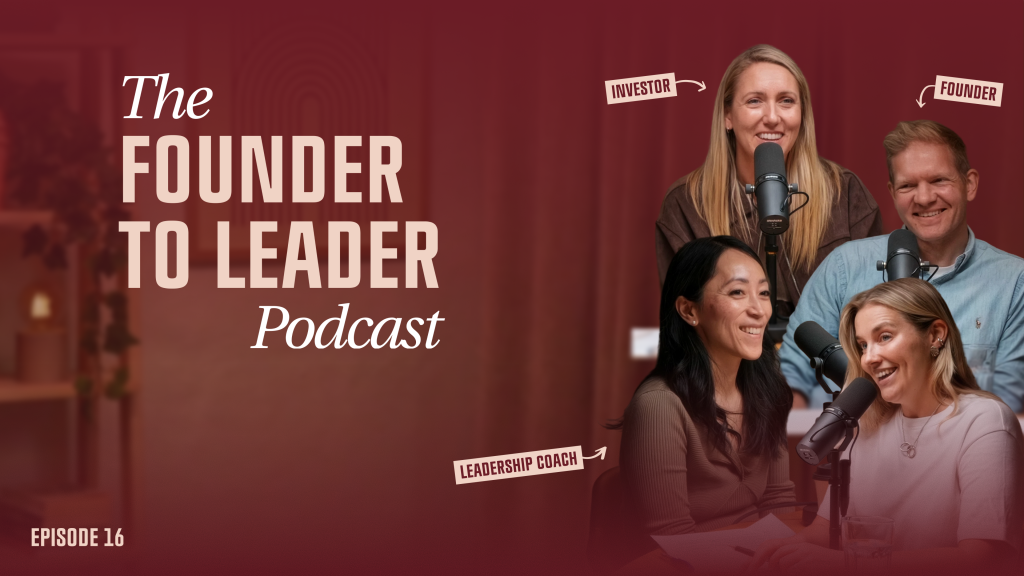
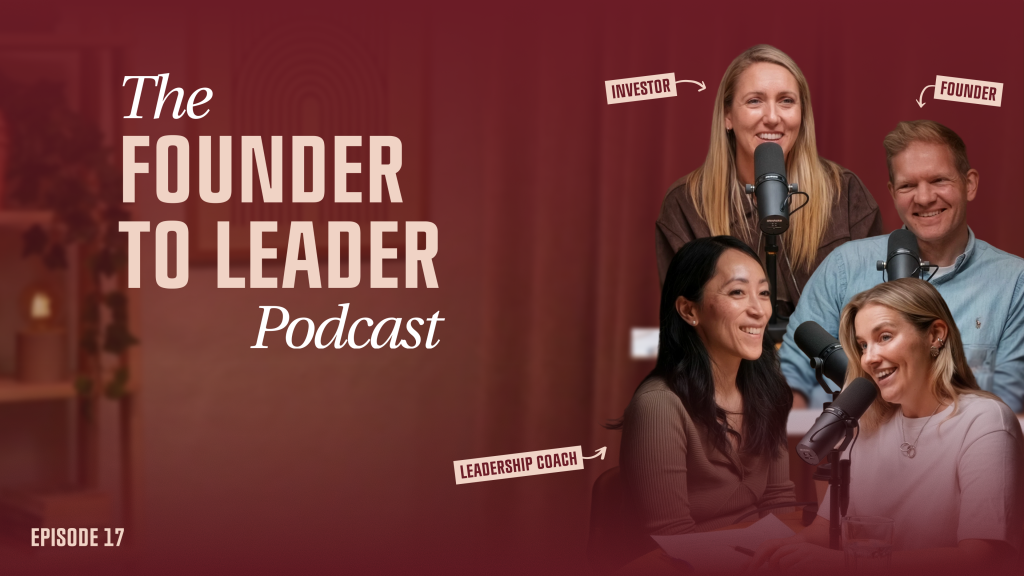
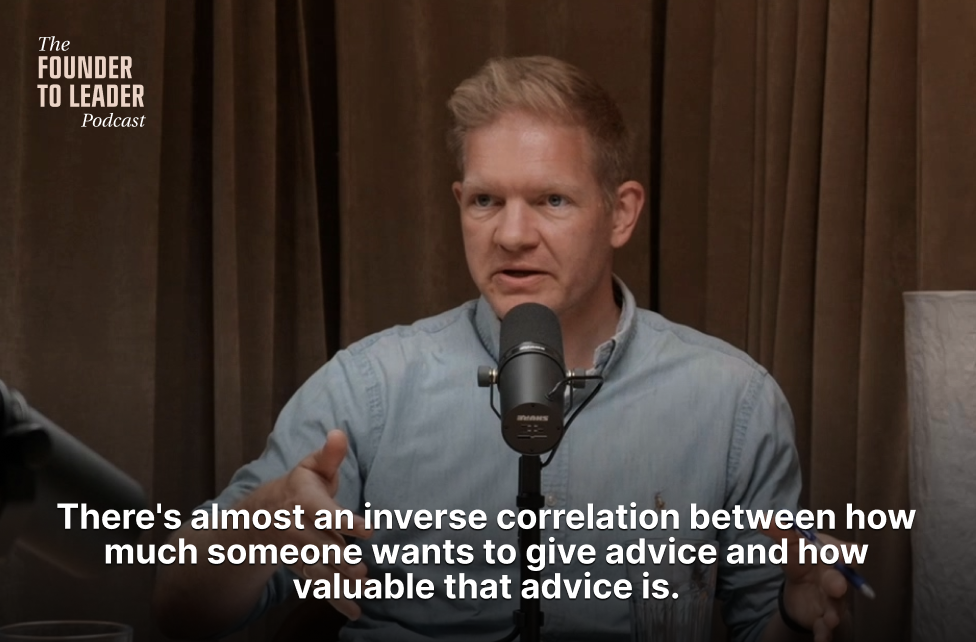
In this episode of The Founder to Leader Podcast, host Yohanna Gustafsson is joined by:

  • Founder Michael Karlsen: co-founded Onomondo in 2012, served as CEO for 8 years and stepped down in 2025
  • Investor Sara Rywe: general partner at byFounders and investor in Lovable, Corti, Sumary, etc.
  • Leadership coach Mia Jung: has coached more than 200 founders in leadership development and the psychology of startup organizations
What we unpack

  • Why your investors bet on your judgment and what it means when you override it to please them
  • The double-edged sword of being coachable
  • How investor insecurity shapes the advice founders receive
  • A practical tip: ask your investors to ask questions instead of giving advice
  • How to build principles that anchor your decisions and stop getting pulled into the micro ones

Listen to the episode here:


Submit your own dilemma here!

New grant helps more Danish startups scale through founder leadership

Founder to Leader · 07/10/2026 ·

Many Danish startups never scale into larger companies, often because leadership and organisation fail to keep pace with growth. With a new grant of DKK 5.89 million from the Danish Industry Foundation, Copenhagen Business School is continuing its Founder to Leader programme and launching Scaleup Leadership for founders of more mature growth companies.

As a startup grows, the founder’s role changes. Responsibility has to be delegated, the organisation becomes more complex and decisions can no longer go through one person. This is often where growth stalls, even in companies with the potential to scale internationally.

We need more Danish companies that manage to scale and become real growth companies that create jobs in Denmark. We often talk about access to capital, technology and new markets. But leadership and the organisation also have to keep up. What works when you are five or ten employees is not necessarily what it takes when you become 30 or 50. That is why scaling is also about the founder’s role evolving along with the company,” says Thomas Hofman-Bang, CEO of the Danish Industry Foundation. 

As the company grows, the leadership role changes 

Leadership and organisation are a core research area at Copenhagen Business School. Since 2023, this research has been put into practice through the Founder to Leader programme. With a new grant from the Danish Industry Foundation, the programme can continue and the initiative will now expand with a second programme: 

  • Founder to Leader is aimed at founders with limited leadership experience who have hired their first full-time employees and need to transition from founder to leader.
  • Scaleup Leadership is aimed at founders of companies with multiple management layers, where the task is increasingly to lead through other leaders and build an organisation that can sustain continued growth.

Denmark and the EU need more startups to develop into successful companies. One of the barriers is the difficult shift from a product focus to a fully commercial business, which requires knowledge of business development and leadership. These are areas where we at CBS have strong research and deep expertise. The grant from the Danish Industry Foundation is important because it ensures that we can work in a targeted way to give companies the knowledge and support they need,” says Morten Frederiksen, Dean of Research, Innovation and Societal Impact at Copenhagen Business School. 

“Leading a startup is partly about gradually learning to let go. As the company grows, founders need to learn to delegate responsibility and let others make decisions. You go from being involved in everything to setting the direction and creating good conditions for leadership throughout the company,” says Mia Jung, who is responsible for scaling, leadership and organisation at CBS’s Copenhagen School of Entrepreneurship (CSE). 

To date, 212 entrepreneurs have completed Founder to Leader, which focuses on the organisational and cultural shift required when a founder moves from being involved in every decision to trusting their team.

About Founder to Leader 

Founder to Leader was developed by Copenhagen School of Entrepreneurship (CSE) at CBS with support from the Danish Industry Foundation and has been running since 2023.

In the new phase, Founder to Leader continues and is complemented by Scaleup Leadership, aimed at founders of more mature scaleups with more complex organisations.

The Danish Industry Foundation has granted DKK 5.89 million to the new phase. 

The project runs from 1 July 2026 to 30 June 2028. 

In the new phase, Founder to Leader will run four cohorts with a total of around 100 founders. Scaleup Leadership will run 2–3 cohorts with a total of 24–32 participants.

The project is run by CSE at CBS in collaboration with a broad range of ecosystem stakeholders. 

For further information 

Danish Industry Foundation:
Amalie Sophie Thal Jantzen, email: aj@industriensfond.dk / tel. +45 3113 1060 

Copenhagen Business School:
Mia Jung, email: mj.cse@cbs.dk / tel. +45 2852 6633 

“Should I Step Down as CEO?”

Founder to Leader · 30/09/2026 ·

9 months post-seed, a founder realizes he hates what the CEO role requires. Step down or stay? Three guests, three perspectives.


The dilemma

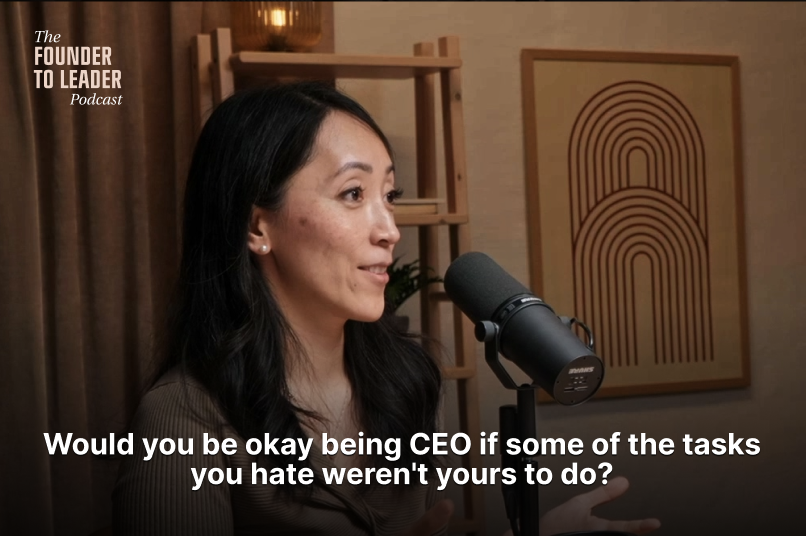
A VC-backed founder 9 months post-seed with a team of 15 has come to a realization: he hates what his CEO role now requires.

All he wants is to throw himself back into the complex, undefined product challenges, but instead he’s stuck in people management, hiring conversations and building processes.

He has no intention of leaving the company, but is considering stepping aside.

What scares him most is admitting to his lead investor, who’s been with them since pre-product, that he’s the wrong person for the role because it feels like betraying the reason they invested in the first place.

Is stepping aside the right call, or is there a way to redesign the role instead?

The guests

In this episode of The Founder to Leader Podcast, host Yohanna Gustafsson is joined by:

  • Founder Michael Karlsen: co-founded Onomondo in 2012, served as CEO for 8 years and stepped down in 2025
  • Investor Sara Rywe: general partner at byFounders and investor in Lovable, Corti, Sumary, etc.
  • Leadership coach Mia Jung: has coached more than 200 founders in leadership development and the psychology of startup organizations

What we unpack

  • The difference between hating the tasks and hating the role
  • How the CEO role quietly changes every year
  • Insecurity vs motivation – how to tell whats actually driving your doubts
  • Two paths for founders who want out of the CEO role
  • Why hiring an external CEO at an early stage sends a negative signal to investors
  • What a venture-backed CEO still cant delegate
  • Designing a CEO role that fits you, not the stereotype

Listen to the episode here:


Submit your own dilemma here!

Copyright © 2026 · Copenhagen Business School

  • Privacy Policy
  • Accessibility Statement